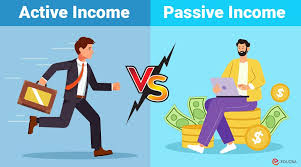
Passive income is earnings that require minimal ongoing effort to maintain. It’s often confused with “get rich quick” schemes. True passive income involves upfront work or investment that generates regular income without constant active participation.
Understanding Passive Income vs. Active Income
Let’s start with the basics. Active income is money you earn from a job. You trade your time for money. Think of a salary or hourly wages. If you stop working, the money stops. This is what most people do every day.
Passive income is different. The goal is to earn money without trading your time directly for it. It’s about building assets. These assets then generate income for you. This income continues even when you are not actively working on it.
The key difference is the ongoing effort. Active income needs constant effort. Passive income needs initial effort. Then, it needs maintenance. But this maintenance is much less than a full-time job.
The Most Common Passive Income Myths
Many people believe in myths about passive income. These myths make it seem too easy. They can lead to disappointment. Let’s break down some of the biggest ones.
Myth 1: Passive Income Means No Work
This is the biggest myth. People think they can just create something once and get paid forever. It’s like magic money. That’s not how it works in reality.
Building any income stream takes effort. Passive income requires significant effort upfront. This could be time, money, or both. Think about writing a book. You spend months writing and editing. That’s the active part. Once it’s published, it can earn royalties. But you still need to market it. You might need to update it later. So, it’s not zero work. It’s less work over time.
I remember trying to start a blog. I thought I’d write a few posts. Then, money would just pour in. I spent weeks writing content. I learned about SEO. I promoted posts on social media. It took a lot of time and energy. Even now, I spend time updating old posts. I answer comments. It’s not entirely passive. But the income it generates is mostly passive compared to my day job.
Myth 2: You Need a Lot of Money to Start
Some passive income ideas do require capital. Investing in rental properties is a good example. You need a down payment. You need money for repairs. But not all passive income needs a huge bank account.
You can start with skills you already have. Creating online courses takes time. You need to plan, film, and edit. But the cost to start can be low. You might only need a decent camera and editing software. There are many platforms that host courses for free. They take a cut of sales.
Affiliate marketing is another option. You promote other people’s products. You earn a commission on sales. This can be done through a blog, social media, or YouTube. The main investment here is your time and effort. You need to build an audience first.
Myth 3: Passive Income is a Get-Rich-Quick Scheme
This is a dangerous myth. It preys on people’s desire for quick financial gain. True passive income takes time to build. It’s a marathon, not a sprint.
If someone promises you millions in a few weeks with no effort, be very skeptical. They are likely selling you a dream. Or worse, a scam. Building wealth usually involves consistent effort and smart decisions over a long period.
I saw an ad once that said “Earn $10,000 a month by doing nothing!” It was for a system that involved buying a specific software. It sounded too good to be true. And it was. Many people lost money on these schemes. It’s important to be realistic. Passive income is about steady growth.
Myth 4: All Passive Income is Equal
Not all passive income streams are created equal. Some are more passive than others. Some require more upfront investment. Some have higher potential returns.
For example, dividend stocks can be very passive. Once you buy the stocks, you receive dividends. You might need to rebalance your portfolio once a year. This is minimal effort. On the other hand, an online business that requires customer support might be less passive.
It’s important to match your passive income strategy to your goals and resources. Do you have time? Do you have money? What risks are you willing to take? These questions help you choose the right path.
Myth 5: Passive Income Guarantees Financial Freedom Overnight
Financial freedom is a wonderful goal. Passive income can help you reach it. But it rarely happens overnight. It takes time and consistent effort to build enough passive income to live on.
Think of it as building multiple income streams. Each stream might start small. Over time, they grow and add up. You might reach a point where your passive income covers your expenses. That’s financial freedom. But getting there takes patience and persistence.
I’ve talked to many people who are building passive income. They don’t expect to quit their jobs next month. They are focused on adding $100 here, $500 there. They are building towards a larger goal. It’s a steady process of creating value.
Real vs. Perceived Passive Income
Active Income:
- Requires direct time and effort for payment.
- Examples: Salary, hourly wages, freelancing.
- Income stops when work stops.
True Passive Income:
- Requires initial work/investment, then minimal ongoing effort.
- Examples: Rental properties, royalties from books/music, dividend stocks, well-established online courses.
- Generates income even when you’re not actively working.
Semi-Passive Income (Often Mistaken for Passive):
- Requires ongoing, but less intensive, effort than active income.
- Examples: Blogging, affiliate marketing, managing a small online store.
- Needs regular updates, marketing, and maintenance.
The Reality of Building Real Passive Income
So, if the myths aren’t true, what is real passive income like? It’s about smart strategy and patient execution. It’s about creating assets that work for you.
Creating Valuable Assets
Passive income comes from owning or creating assets. These assets generate cash flow. They can be:
- Physical Assets: Like rental properties. You buy a property. You rent it out. The rent is your passive income. You still need to manage tenants and repairs.
- Financial Assets: Like stocks, bonds, or mutual funds. These pay dividends or interest. They can grow in value over time.
- Intellectual Property: Like books, music, software, or online courses. You create it once. It can be sold many times.
- Online Businesses: Websites with ads, affiliate marketing, or digital products. These can be automated to a degree.
Each of these requires different levels of upfront work and capital. Each also has different levels of ongoing maintenance.
The “Work” Part: Upfront Investment
The “work” for passive income usually comes in two forms:
- Time and Skill: This is creating something from scratch. Think writing an e-book, designing an app, or creating an online course. You invest your time and expertise.
- Money: This is investing in existing assets. Examples include buying dividend stocks, real estate, or peer-to-peer lending. You invest capital.
Many successful passive income strategies combine both. You might use your skills to create an online course. Then, you use some of the profits to invest in stocks.
The “Passive” Part: Minimal Ongoing Effort
Once the asset is created or purchased, the goal is to make it as hands-off as possible. This doesn’t mean zero effort. It means effort that doesn’t scale with your income.
For rental properties, this might mean hiring a property manager. For a website, it could mean using automation tools or hiring a virtual assistant for tasks. For investments, it might involve a financial advisor or setting up automatic rebalancing.
I learned this with my rental property. Initially, I did all the repairs myself. I screened tenants. It was a lot of work. I was earning income, but it felt like another job. I hired a property manager. This cost me a percentage of the rent. But it freed up my time. Now, I can focus on finding more investments. The income is still passive, even with the management fee.
Passive Income Streams: The Spectrum
Think of passive income like a scale:
Very Active: Freelance writing, driving for a rideshare service.
Semi-Active: Running an e-commerce store that requires daily customer service, active stock trading.
Semi-Passive: Managing a blog with regular content updates, affiliate marketing that needs content promotion.
Mostly Passive: Rental properties with a property manager, dividend stock portfolios, royalties from published books or music.
The goal is to move towards the “mostly passive” end of the spectrum.
Popular Passive Income Strategies (and what they really involve)
Let’s look at some common ways people try to build passive income. We’ll be honest about the work involved.
1. Real Estate Investing
Buying rental properties is a classic passive income strategy. You buy a house or apartment. You rent it out to tenants. The rent payments are your income.
What’s involved:
- Big Upfront Cost: Down payment, closing costs, potential renovations. This can be tens or hundreds of thousands of dollars.
- Time Investment: Finding properties, securing financing, screening tenants, handling maintenance and repairs, dealing with vacancies and evictions.
- Ongoing Effort: Even with a property manager, you’ll likely handle major decisions and finances.
Is it passive? It can be, especially with good property management. But it requires significant capital and can involve stress.
2. Dividend Stock Investing
Buying stocks in companies that pay dividends is another popular route. Dividends are a portion of the company’s profits paid to shareholders.
What’s involved:
- Capital Investment: You need money to buy stocks. The more you invest, the more dividends you can earn.
- Research: Choosing stable companies with a history of paying and increasing dividends. Understanding the market.
- Ongoing Effort: Less than real estate. You might monitor your portfolio, reinvest dividends, and rebalance your investments annually.
Is it passive? Yes, largely. Once you’ve invested, the income is very passive. The main work is in the initial research and occasional portfolio management.
Dividend Stocks vs. Growth Stocks
Dividend Stocks:
- Companies regularly pay a portion of profits to shareholders.
- Focuses on income generation.
- Often mature, stable companies.
Growth Stocks:
- Companies reinvest profits back into the business for expansion.
- Focuses on capital appreciation (stock price increase).
- Often younger, rapidly growing companies.
For passive income, dividend stocks are usually the preferred choice.
3. Creating and Selling Online Courses
If you have expertise in a subject, you can create an online course. You can sell it on platforms like Udemy, Teachable, or your own website.
What’s involved:
- Time and Skill: Developing the curriculum, recording videos, creating materials, editing. This can take weeks or months.
- Marketing: Promoting your course to attract students. This is an ongoing effort.
- Customer Support: Answering student questions, updating course content.
Is it passive? Semi-passive. The initial creation is very active. Once live, sales can come in automatically. But it requires ongoing marketing and updates to stay relevant.
4. Affiliate Marketing
This involves promoting products or services from other companies. You earn a commission for every sale made through your unique affiliate link.
What’s involved:
- Building an Audience: You need a platform (blog, social media, YouTube channel) and followers who trust your recommendations.
- Content Creation: Writing reviews, creating tutorials, or making videos that naturally incorporate affiliate links.
- Ongoing Marketing: Constantly creating new content and promoting it to keep your audience engaged.
Is it passive? It’s more semi-passive. While sales can happen anytime, you need to continually create content and promote it for ongoing results. Old content can continue to earn, but new promotion is usually needed.
5. Creating and Selling Digital Products
This could include e-books, printables, templates, stock photos, or software. You create it once, and sell it repeatedly.
What’s involved:
- Time and Skill: Designing, writing, or developing the product. This is the most intensive phase.
- Platform Setup: Setting up a shop on Etsy, your own website, or other marketplaces.
- Marketing: Promoting your products to attract buyers.
Is it passive? Semi-passive. After creation, sales can be automated. However, you need to market your products and perhaps update them. Customer service might also be needed.
The “Asset” Factor in Passive Income
Key Characteristic: Ownership or Creation of an Asset
Examples of Assets:
- A rental property
- A portfolio of dividend-paying stocks
- An e-book that’s for sale
- A successful online course
- A well-ranked website with ad revenue
If you’re not building or owning an asset, it’s probably not passive income.
Personal Experience: The Blogging Rollercoaster
I remember the early days of my blog. It was late 2018. I had this idea for a site about home gardening. I loved gardening and wanted to share tips. I thought, “This will be easy! I’ll write a few posts, and people will find them.” I spent my evenings and weekends researching gardening techniques. I took photos of my own plants. I wrote about soil types, pest control, and seasonal planting. I was so excited about the content.
Then came the realization. No one was reading it. My carefully crafted articles were lost in the vastness of the internet. I felt a pang of panic. Was this whole idea a waste of time? My living room was piled with gardening books and notes. I had poured so much energy into it. I looked at the analytics. Zero visitors. It was demoralizing. I almost gave up right then. The dream of passive income felt very far away.
That’s when I learned about SEO. I discovered I needed to understand how search engines worked. I started learning about keywords, backlinks, and site speed. It was a whole new world. I spent months studying and applying these new skills. I revamped my old posts. I wrote new ones with search intent in mind. I learned about affiliate marketing and how to place links naturally. Slowly, painstakingly, traffic started to trickle in. Then it grew. Now, years later, I still spend time on the blog. But the income it generates is far more passive than my initial hourly work. It took that initial intense effort and ongoing learning to get there.
When is Passive Income “Truly” Passive?
So, how do we define truly passive income? It’s about minimizing your ongoing time commitment. It’s about automation and delegation.
Low Maintenance Assets
Some assets require very little upkeep. Consider:
- Index Funds: Investing in a broad market index fund is hands-off. You buy it and let it ride.
- High-Quality Rental Properties: With a great property manager and good tenants, it can be very passive.
- Established Royalties: A published book that continues to sell without new promotion.
Leveraging Others
Paying others to do the work is key. This includes:
- Property Managers: For real estate.
- Virtual Assistants (VAs): For administrative tasks, customer service, or content promotion.
- Financial Advisors: For managing investment portfolios.
The cost of these services eats into profits. But it’s the price of making income truly passive. You are exchanging money for your time and freedom.
Delegation for Passivity
What to Delegate:
- Tenant screening and communication
- Routine property maintenance
- Answering customer service emails
- Social media posting and engagement
- Bookkeeping and invoicing
Why Delegate:
- Frees up your time for higher-value tasks or leisure.
- Allows your income streams to scale without you scaling your effort.
- Reduces stress and burnout.
Common Pitfalls to Avoid
Knowing the myths is one thing. Avoiding the traps is another. Here are some common mistakes people make.
Pitfall 1: Chasing Shiny Objects
The internet is full of new “passive income opportunities” every week. It’s easy to jump from one thing to the next, never sticking with anything long enough to see results.
Solution: Pick one or two strategies that align with your resources and interests. Commit to them for at least 1-2 years. Give them a real chance to grow.
Pitfall 2: Underestimating Competition
Many popular passive income areas are crowded. Think about blogging or starting a YouTube channel. It’s hard to stand out.
Solution: Find a niche within a niche. Offer a unique perspective. Focus on quality and providing genuine value to a specific audience.
Pitfall 3: Ignoring Taxes and Fees
Passive income is still income. You’ll owe taxes on it. Don’t forget about fees from platforms, property managers, or investment services.
Solution: Consult with a tax professional. Keep good records of all income and expenses. Factor these costs into your profit calculations.
Pitfall 4: Not Diversifying
Relying on a single passive income stream is risky. If that stream dries up, you’re back to square one.
Solution: Build multiple income streams over time. Start with one, get it working, then add another. This creates stability.
Building a Diversified Passive Income Portfolio
Start Small: Pick one strategy that fits your current situation.
Reinvest Profits: Use early earnings to fund new ventures or expand existing ones.
Spread Your Bets: Aim for a mix of different asset types (e.g., some real estate, some stocks, some digital products).
Review Regularly: Assess your portfolio annually to ensure it’s still aligned with your goals.
What This Means for You: Practical Steps
Understanding passive income myths and realities is crucial. It helps you set realistic expectations. It guides you toward effective strategies.
When is it Normal?
It’s normal for passive income to start small. It’s normal to need upfront effort. It’s normal to invest money or time. It’s also normal for growth to be gradual, not instant.
If you’re working on a passive income project and seeing slow progress, that’s often a good sign. It means you’re likely on the right track. You are building something real.
When to Worry (or Re-evaluate)
You should worry if:
- Someone promises guaranteed high returns with no risk.
- You are asked to pay large upfront fees for “training” or “systems” that seem vague.
- The promised effort is truly zero, but the returns are huge.
- You’ve put in consistent effort for over a year and seen absolutely no traction.
These are red flags indicating potential scams or unsustainable models.
Simple Checks You Can Do
Before diving into a passive income idea:
- Research the creator: Do they have real success or are they selling a dream?
- Look for reviews: What are other people saying?
- Calculate costs: What is the real financial and time investment?
- Estimate returns: Be conservative. What’s a realistic worst-case scenario?
Asking these questions helps you stay grounded.
Quick Tips for Building Genuine Passive Income
Here are some actionable tips:
- Educate Yourself Continuously: The landscape changes. Keep learning about your chosen strategies.
- Focus on Value: Whether it’s a product, service, or content, it must offer real value to someone.
- Be Patient and Persistent: Building passive income takes time. Don’t get discouraged by initial slow progress.
- Automate and Delegate: As your income grows, reinvest in tools or people that make it more passive.
- Track Everything: Monitor your income, expenses, and time investment for each stream.
- Start Now, Even Small: The best time to start was yesterday. The second best is today. Even a small, consistent effort can build over time.
Your Passive Income Action Plan
Step 1: Assess Your Resources.
- What skills do you have?
- How much time can you commit?
- How much capital can you invest (if any)?
Step 2: Choose a Strategy.
- Select one or two that fit your assessment.
- Prioritize strategies with proven track records.
Step 3: Create Your Asset.
- This is the upfront work phase.
- Focus on quality and value.
Step 4: Launch and Market.
- Get your asset in front of your target audience.
- Continue promotion.
Step 5: Automate and Optimize.
- Look for ways to reduce ongoing effort.
- Review performance and make adjustments.
Frequently Asked Questions About Passive Income
Is it possible to make money while you sleep?
Yes, that’s the goal of true passive income. Assets like rental properties, dividend stocks, or online products can generate income 24/7, even when you are sleeping or on vacation. However, building these assets requires significant upfront work or investment.
What’s the difference between passive income and side hustles?
Side hustles are often active income streams you do in your spare time, like driving for a rideshare or doing freelance work. Passive income aims to require minimal ongoing effort after an initial investment of time or money. Many side hustles can evolve into passive income streams over time.
How much money can you realistically make from passive income?
This varies greatly. It depends on the strategy, your investment, your effort, and market conditions. Some people earn a few hundred dollars a month, while others earn hundreds of thousands.
It’s a long-term build, not an instant fortune.
Can I start building passive income with no money?
It’s challenging but possible. Strategies like blogging, affiliate marketing, or creating digital products primarily require your time and skills as the initial investment. You’ll need to build an audience or create valuable content, which takes significant effort.
Is real estate investing a good passive income strategy?
Real estate can be a very effective passive income strategy, especially rental properties. However, it requires a substantial upfront investment and involves responsibilities like property management, maintenance, and tenant issues. Hiring a good property manager can make it more passive.
How long does it take to see passive income results?
This depends on the method. Some strategies, like dividend investing, can start paying off relatively quickly after investment. Others, like building a blog or an online course, can take months or even years to generate significant income.
Patience is key.
Conclusion: Building Real Wealth Takes Time and Effort
Passive income is a powerful concept. It offers a path to financial freedom. But it’s not magic. It requires smart work, patience, and realistic expectations. By understanding the myths and focusing on building genuine assets, you can create income streams that work for you. The journey might be longer than the gurus promise, but the rewards are real.